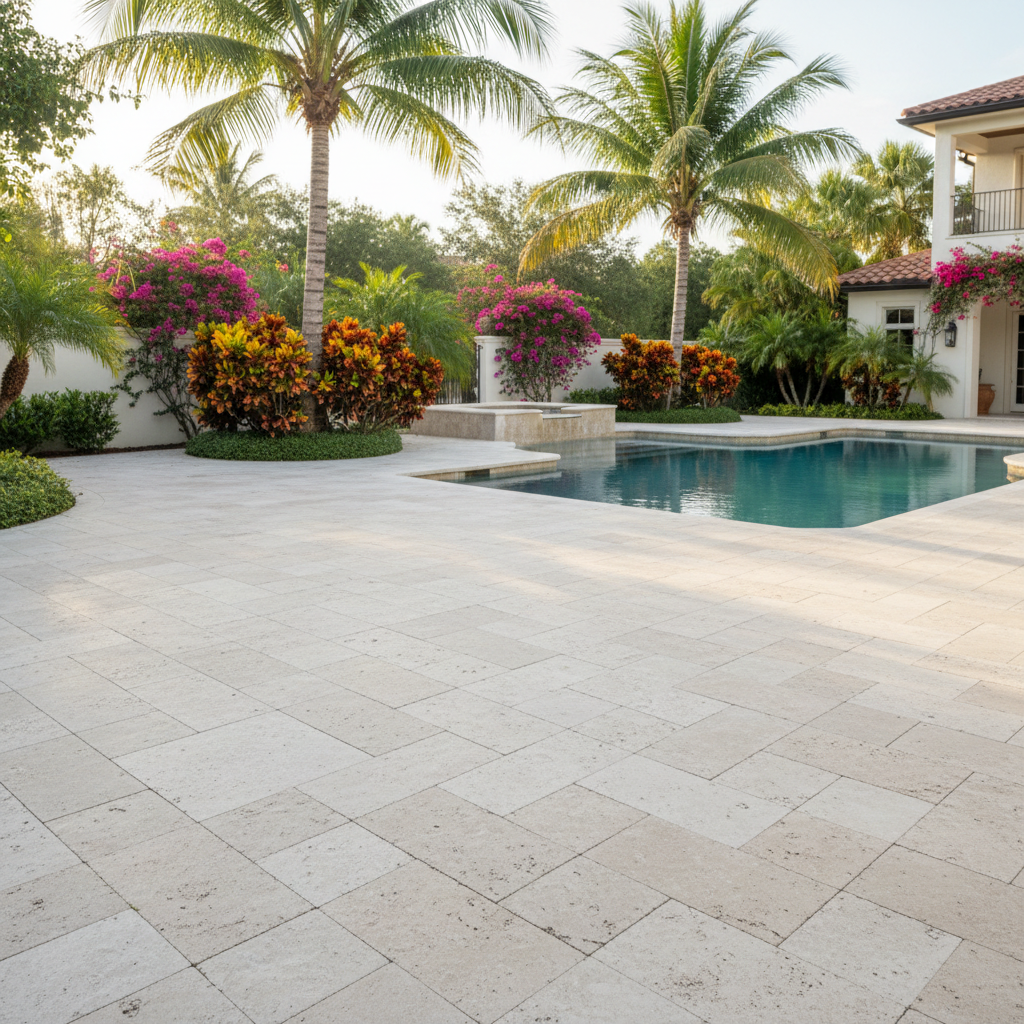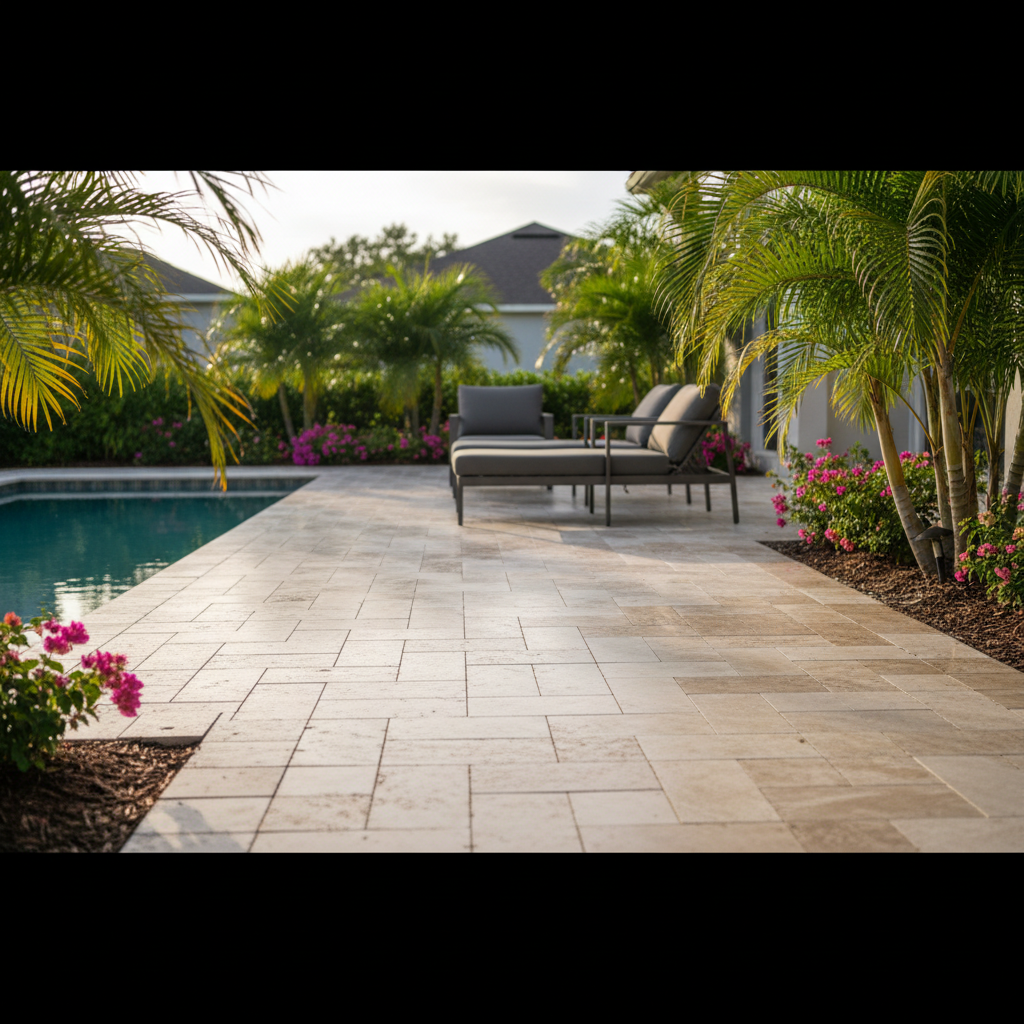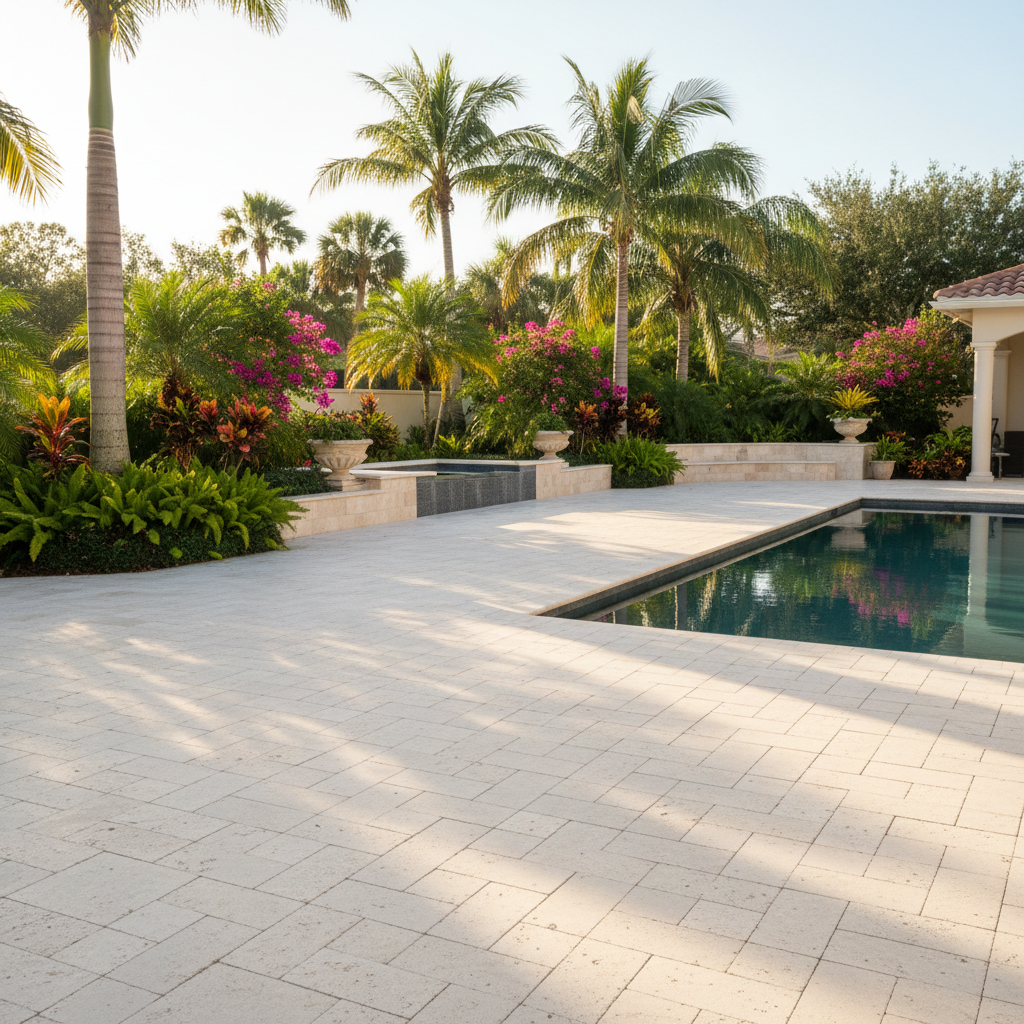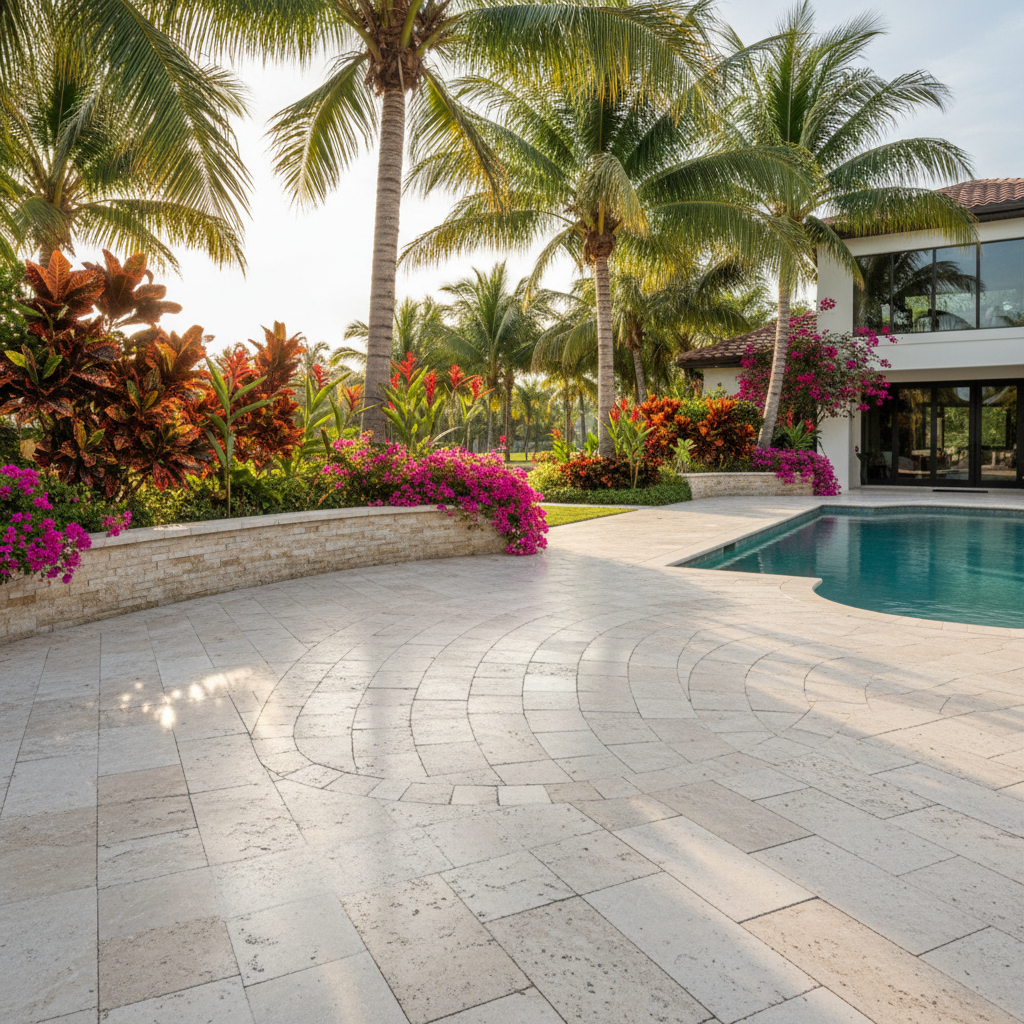
Travertine is the material of choice for luxury homes in Estero for a reason. Its unique character, drawn from the earth, presents a surface of timeless elegance—cool underfoot, rich in texture, and seamlessly integrated with the architectural language of Southwest Florida. From expansive pool decks in West Bay Club to elegant driveways in The Vines, travertine is a statement of enduring quality.
However, this natural stone is porous. Left unsealed and exposed to the specific environmental pressures of Estero, its inherent beauty can become a liability. Protecting this investment requires a discerning eye, one that can recognize the subtle, and often not-so-subtle, indicators of distress before they escalate into irreversible damage.
Sign 1: The Vanishing Luster
One of the most immediate and visible signs of distress is a noticeable loss of color and vibrancy. The rich, nuanced tones—the creams, tans, and subtle silver veins—begin to appear muted, washed-out, or chalky. This is a direct consequence of photodegradation from Florida's intense ultraviolet rays. An unsealed travertine surface that was once the centerpiece of your lanai can fade into a pale, uninspired version of its former self. If your pavers look vibrant when wet but dull when dry, you are witnessing the color that a premium sealant can permanently lock in.
Sign 2: The Invasion of Stains and Discoloration
Because travertine is essentially a form of limestone, it is highly susceptible to staining without a protective barrier.
- Organic Staining: Fallen leaves, blossoms from Royal Poinciana trees, and tracked-in dirt can leave tannins and organic pigments that seep into the stone, creating unsightly brown and green patches. High humidity accelerates the growth of mold and algae, which thrive in the stone's microscopic pores.
- Efflorescence: Do you see a persistent, white, chalky film on the surface? This is efflorescence, a common issue in our coastal climate. Mineral salts from within the stone or the substrate beneath are drawn to the surface by water and left behind as the moisture evaporates. While it may seem cosmetic, it indicates a significant moisture issue that can degrade the stone over time.
- Rust and Chemical Stains: Patio furniture, iron-rich irrigation water, fertilizers, and accidental spills can all lead to deep-set chemical stains that require professional intervention. A proper seal provides a crucial window of time to clean these spills before they become a permanent part of the stone.
Sign 3: The Water Test Doesn't Lie
This simple diagnostic is revealing. Spray a bit of water onto your travertine surface. If the water beads up, your sealant is likely still performing its duty. If, however, the water immediately darkens the paver and soaks in, the stone is unprotected. A porous paver is a sponge, absorbing every drop of rain, morning dew, and sprinkler spray. This constant moisture is the primary catalyst for mold, efflorescence, and the internal erosion of the stone itself.
Sign 4: The Unseen Threat of Pitting and Etching
Pitting is the formation of small holes and voids in the travertine, which are a natural feature of the stone. However, when unsealed, these pits collect dirt and debris, and exposure to acidic rain or pool chemicals can cause them to enlarge. Etching is surface-level damage that appears as dull spots, often caused by acidic substances (like citrus, vinegar, or certain cleaners) that have literally eaten away at the stone. A sealed surface resists this chemical assault, preserving the smooth, refined finish.
Why This Matters in Estero
Residing in Estero places unique demands on your exterior surfaces. Proximity to the Estero Bay and the Gulf of Mexico means the air itself carries a fine, salty aerosol that is corrosive to natural stone. Communities from Pelican Landing to Miromar Lakes are not immune. This salt air accelerates the degradation of unsealed travertine, exacerbating pitting and wear.
Furthermore, the region's persistent, year-round humidity creates a perfect incubator for mold and algae within the stone's pores. An unsealed travertine patio in Estero is not a question of if it will develop organic growth, but when. Our expert Estero paver cleaning is the essential first step, but without the final protection of a sealant, the cycle will simply repeat itself.
The intense, direct sun of a Southwest Florida summer relentlessly beats down on these surfaces. This UV exposure is the primary driver of color fade, turning a once-beautiful hardscape into a washed-out field of stone. Our meticulous Estero paver restoration and sealing process is designed specifically to combat these local aggressors.
The Paver Protect Pro Solution: Beyond Sealing
Our approach is not merely about applying a product; it’s a comprehensive restoration service. We begin with a deep, professional cleaning to remove all accumulated dirt, mold, and efflorescence. We then address any specific staining before applying a penetrating, commercial-grade sealant that works below the surface.
This sealant creates an invisible, breathable barrier that:
- Enhances and Locks In Color: Restoring the travertine's natural vibrancy.
- Inhibits Stains: Repels oil, rust, and organic materials.
- Prevents Moisture Intrusion: Halts efflorescence and mold growth at the source.
- Includes Non-Slip Polymers: Ensures a safe surface for pool decks and walkways.
Your Estero residence deserves a standard of care that matches its prestige. Recognizing these signs of wear and engaging professional travertine sealing is the definitive step in preserving the beauty, safety, and value of your home's most elegant surfaces. For a seamless evaluation, we invite you to try our free AI photo estimate and see the potential for yourself.
Frequently Asked