The Enduring Appeal of Travertine in Naples
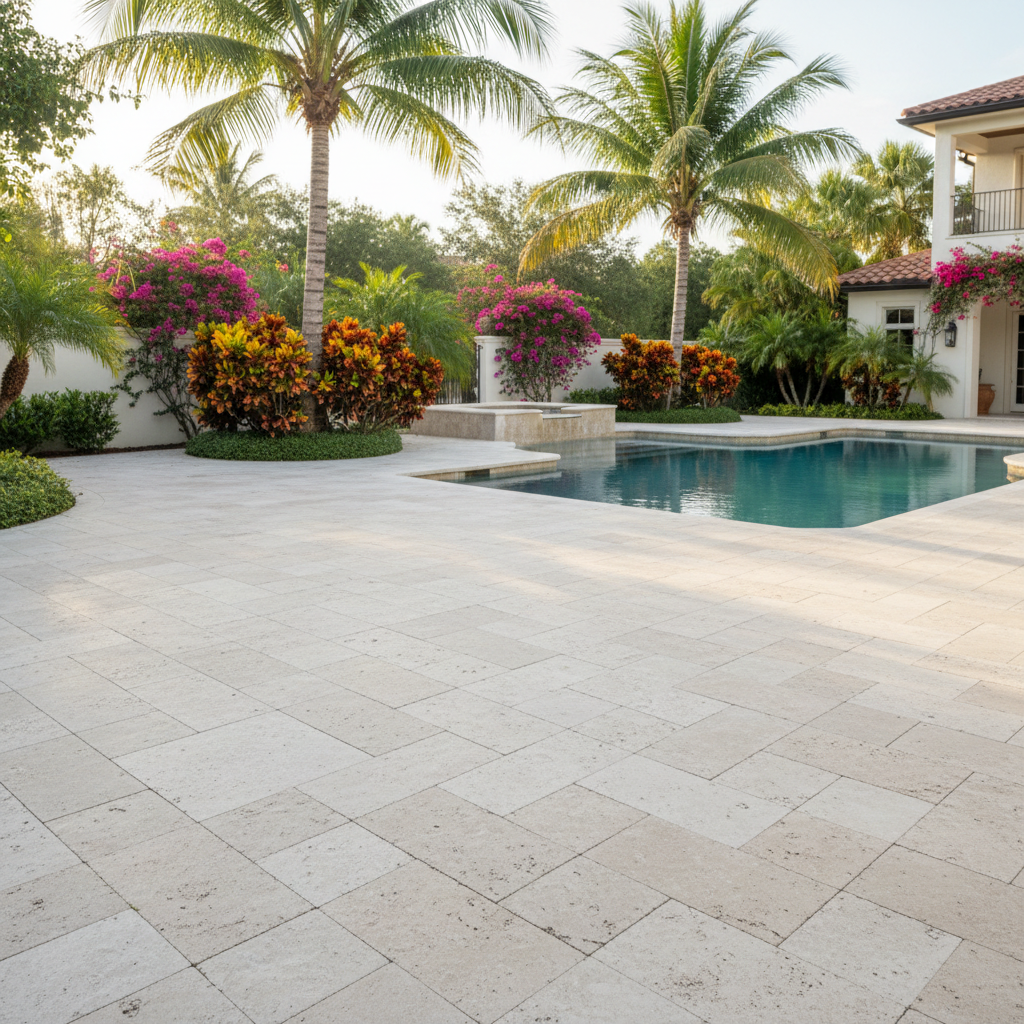
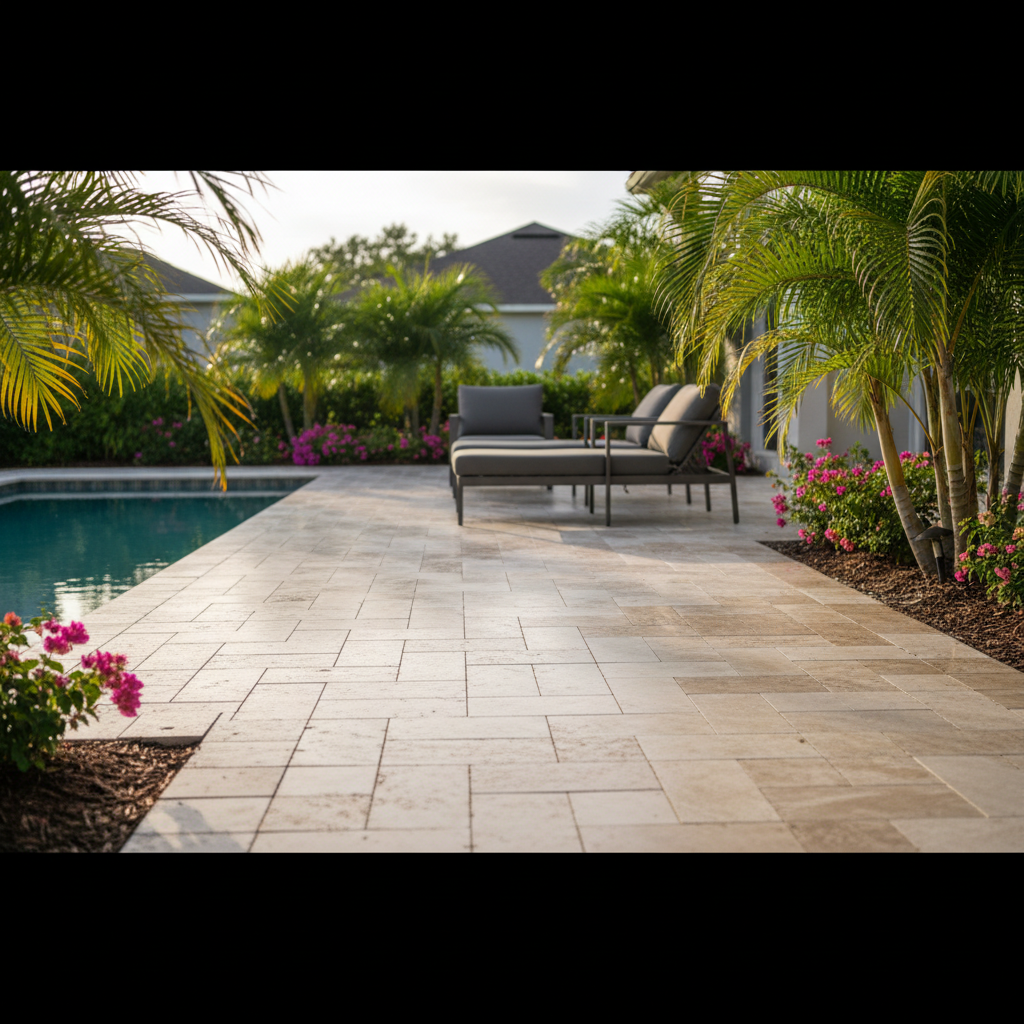
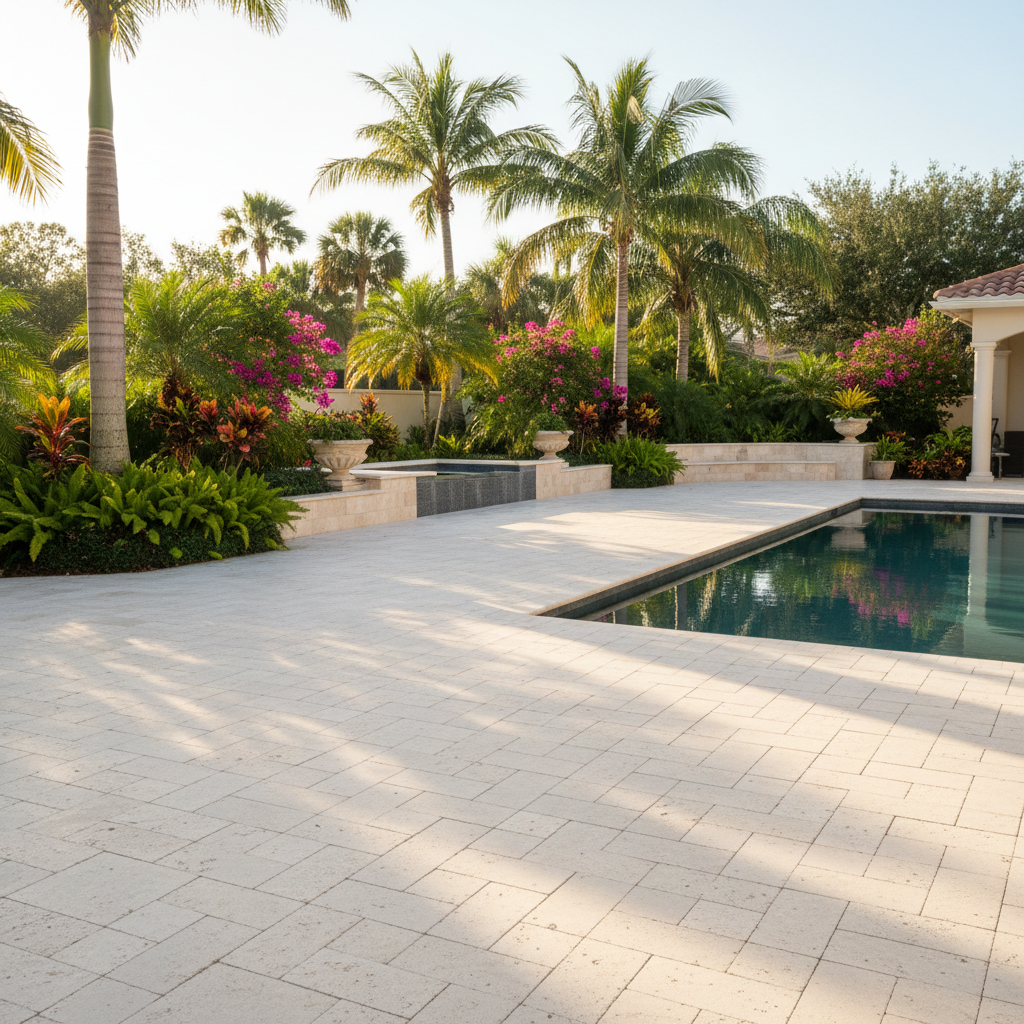
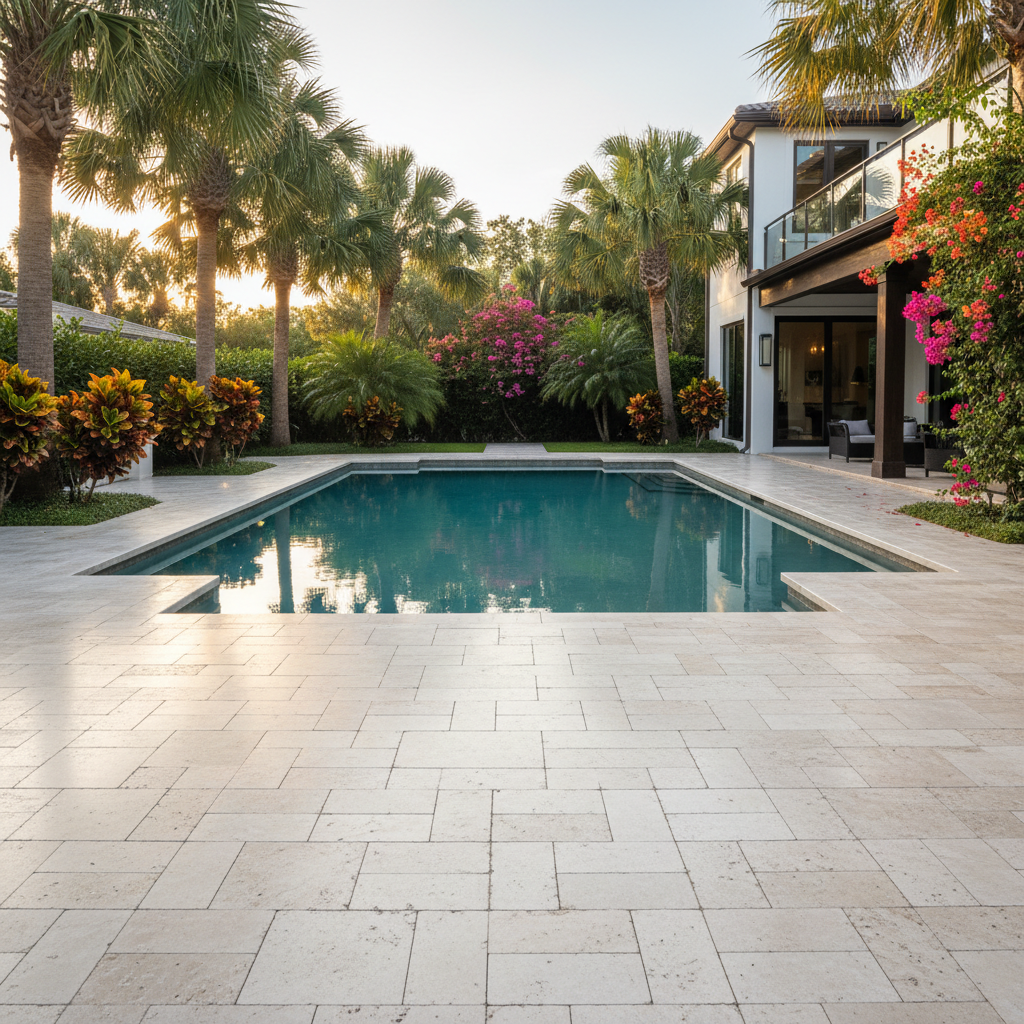
In the discerning communities of Naples, from Port Royal to Pelican Bay, travertine is a signature of architectural refinement. Its cool, tactile surface and unique mineral veining make it the premier choice for pool decks, lanais, and grand entrances. This natural stone, formed in ancient geothermal springs, brings a sense of timeless permanence and organic luxury to a residence.
However, the very qualities that make travertine beautiful—its porosity and natural composition—also make it susceptible to the unique environmental pressures of coastal Southwest Florida. To maintain its integrity and appearance, professional sealing is not a luxury, but a necessity.
Understanding Travertine: A Porous Foundation
Unlike manufactured pavers, travertine is a form of limestone, characterized by its fibrous, concentric patterns. These patterns are the result of gas bubbles escaping as the stone was formed, creating a network of microscopic pores and channels. While this porosity is what keeps a travertine pool deck cool under the intense Florida sun, it is also a direct pathway for moisture, salt, and other contaminants to penetrate the stone.
When left unsealed, this porous structure acts like a sponge. Rainwater, pool chemicals, salt from the nearby Gulf air, and organic tannins from falling vegetation are all absorbed deep into the stone. This can lead to a host of issues, from aesthetic blemishes to premature structural decay.
Why This Matters in Naples
The climate and coastal geography of Naples present a specific set of challenges for any natural stone surface. For travertine, the threat is threefold: intense UV radiation, high humidity coupled with torrential rain, and airborne salinity.
Our proximity to the Gulf of Mexico means the air is laden with salt, which is hygroscopic—it attracts water. This salt-laden moisture is readily absorbed by unsealed travertine, where it crystallizes within the stone's pores. As the crystals expand and contract with temperature changes, they exert internal pressure, leading to a phenomenon known as spalling. This manifests as pitting, flaking, and a gradual crumbling of the surface, compromising both the beauty and the structural integrity of your installation.
Furthermore, the subtropical sun in Naples is relentless. It accelerates the breakdown of the stone's natural binders, while the six-month rainy season provides a constant source of moisture for mold, algae, and mildew to flourish within the porous surface. This results in a perpetually damp, slippery, and discolored appearance that detracts from the clean lines of a luxury property. Proper Naples paver sealing provides a critical barrier against these relentless attacks.
The Proactive Solution: The Sealing Process
Professional travertine sealing is an investment in preservation. The process involves several meticulous steps to ensure a flawless and lasting finish.
First, the surface must be impeccably cleaned. This goes far beyond a simple pressure wash. Our technicians use specialized, pH-neutral cleansers to lift deep-set stains, eradicate algae and mildew spores, and remove any efflorescence (mineral salt deposits) without etching the delicate stone.
Next, the stone must be allowed to dry completely. Applying a sealer to a damp surface would trap moisture, creating a cloudy finish and promoting microbial growth beneath the seal coat.
Finally, a premium-grade, penetrating sealer is applied. Unlike topical coatings that merely sit on the surface, a penetrating sealer is absorbed into the travertine's pores. It chemically bonds with the stone to form a hydrophobic barrier from within. This barrier repels water and prevents stains from oil, fertilizers, and organic matter without altering the stone’s natural, non-slip texture or appearance. The result is a protected surface that is easier to clean and resistant to the harsh Naples environment, preserving the elegance of your driveway or patio for years to come.
The Tangible Benefits of Professional Travertine Sealing
- Stain Resistance: A sealed surface resists absorption, preventing spills from becoming permanent stains.
- Erosion & Spalling Prevention: By blocking water and salt intrusion, sealing halts the internal degradation of the stone.
- Enhanced Aesthetics: Sealing can enrich the natural colors and patterns of the travertine, providing a subtle, sophisticated sheen without a slippery gloss.
- Mold & Algae Inhibition: Eliminating a source of moisture makes the surface inhospitable to unsightly and hazardous organic growth.
- Simplified Maintenance: Sealed travertine is significantly easier to sweep and rinse clean, reducing upkeep efforts.
Your Naples home is a significant investment. Protecting its exterior surfaces is fundamental to preserving its value and aesthetic appeal. For a precise evaluation of your travertine surfaces, we invite you to use our confidential AI-powered photo estimate tool to begin the conversation.
Frequently Asked